
 +86 0(20) 8488 0520
+86 0(20) 8488 0520

As a B2B buyer or retail designer, you know that visual impact directly drives foot traffic. An LED light box is an illuminated commercial display system engineered to back-light graphics, making advertisements pop with vibrant clarity. Unlike traditional printed posters that rely on external ambient lighting, these systems use internal LED light sources to capture consumer attention instantly.
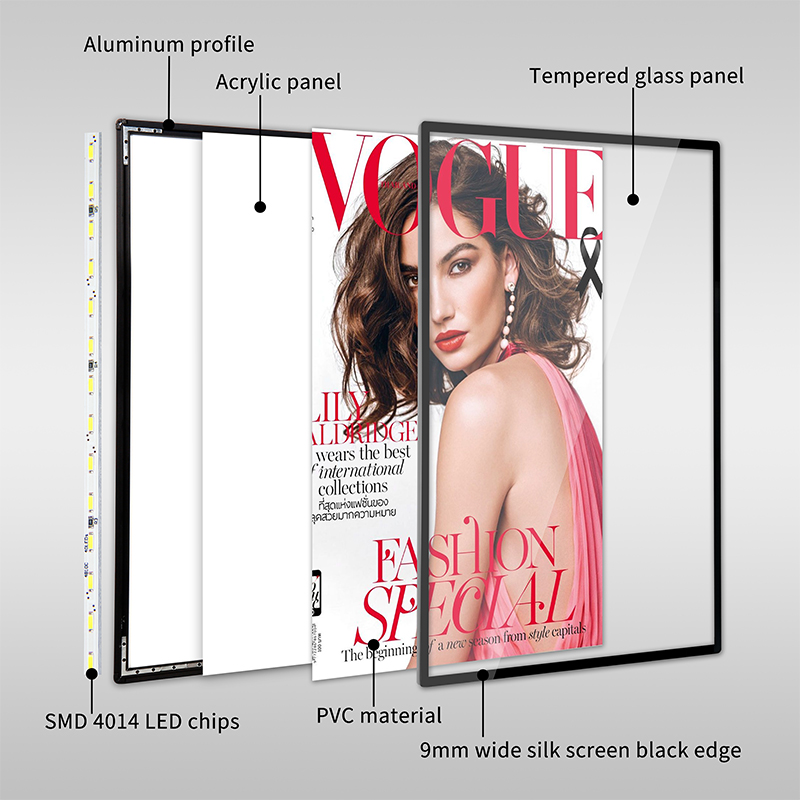
The core components of a high-quality display LED light box include:
Choosing the right architectural format depends entirely on your client’s roll-out environment, update frequency, and budget.
| Feature | Fabric Lightbox Display (SEG) | Backlit Flim Poster Change System |
|---|---|---|
| Graphic Attachment | Silicone Edge Graphic (SEG) tucked into frame grooves | Aluminum Groove |
| Bezel Visibility | Virtually frameless, edge-to-edge aesthetic | Visible aluminum border (typically 9mm–10mm) |
| Max Scale | Excellent for large-scale, massive wall installations | Best suited for small to medium poster sizes |
| Glare Level | Zero glare; matte polyester fabric absorbs ambient light | Slight glare; utilizes a protective PET plastic overlay |
| Shipping Profile | Flat-packed frames reduce logistics costs significantly | Shipped fully assembled, increasing volumetric freight fees |
Modern retail design and commercial advertising rely heavily on advertising LED light box to maximize brand impact.
When you are sourcing a commercial display LED light box at scale, the frame is your foundation. Many B2B buyers focus entirely on the lighting and overlook the metal structure. However, a weak frame leads to bowing, warped graphics, and costly on-site replacements. As a dedicated light box manufacturer, CITYLUX always emphasize that structural integrity dictates the actual lifespan of your retail or advertising rollout.
The structural strength of an advertising LED light box depends heavily on the specific alloy grade and the thickness of the metal.
The finish of your frame determines how well it withstands scratches, fingerprints, and environmental wear in busy retail hubs or transit stations.
When sourcing from an LED light box supplier, you cannot afford patchy lighting or color mismatches across your retail rollouts. Consistent optical uniformity & brightness require strict technical standards before you sign off on a bulk order.
The LGP is the core of any slim display LED light box. Ensure your light box manufacturer uses laser-engraved or V-cutting methods on 100% virgin PMMA acrylic sheets. Cheap, recycled acrylic yellows quickly and causes dark spots, destroying the visual impact of your advertising LED light box.
To avoid multi-location color shifts, confirm the supplier uses strict LED chip binning consistency (within a 3-step MacAdam ellipse). This ensures the color temperature matches perfectly across 50 or 500 stores.
High brightness generates heat. Without proper thermal management, LEDs degrade rapidly, leading to dimming and color shifting.
| Feature | Standard Requirement | B2B Buyer Benefit |
|---|---|---|
| PCB Board | Thick aluminum substrate | Efficient heat dissipation |
| LED Strips | Direct contact with aluminum extrusion profile | Prevents overheating |
| Lifespan Target | $L_{70}$ $> 50,000$ hours | Lowers maintenance costs |
When sourcing an advertising LED light box or bulk display LED light box setups, looking under the hood at the electrical components is non-negotiable. A premium frame means nothing if the power supply fails or creates a fire hazard on your client’s site. As an experienced light box manufacturer, CITYLUX prioritize strict electrical audits to protect your investment and brand reputation.
The LED driver is the heart of your led lightbox display. We audit drivers based on true efficiency and power factor (PF).
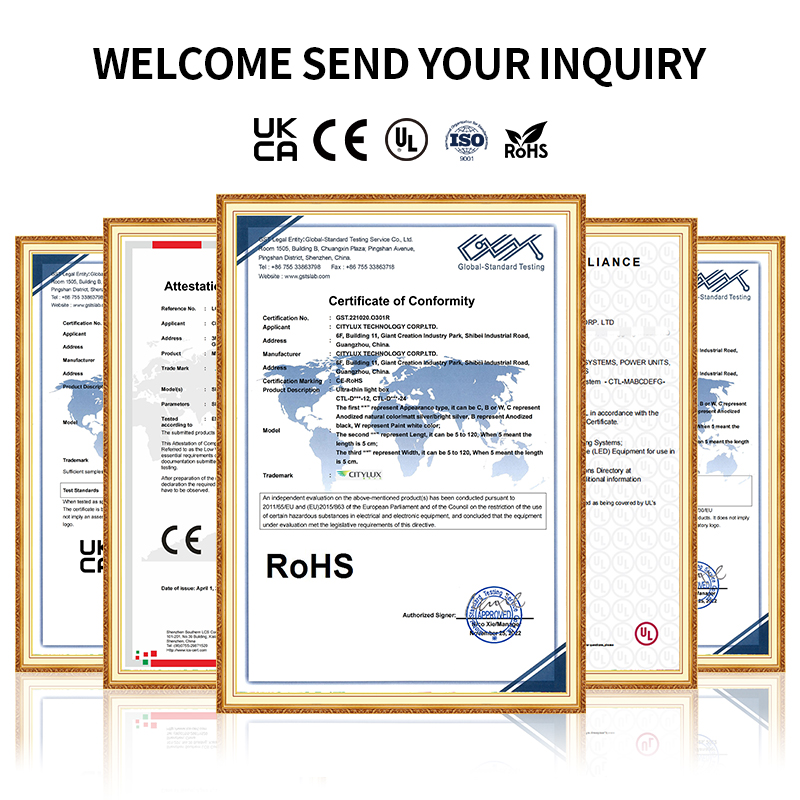
Never take a supplier’s word on compliance. Genuine certifications are mandatory for customs clearance and commercial insurance compliance.
| Certification | Target Market | What It Verifies |
|---|---|---|
| UL / ETL | United States & Canada | Strict North American safety and flame-retardant standards. |
| CE | European Economic Area | Conformity with health, safety, and environmental protection. |
| RoHS | Global / Europe | Restriction of hazardous substances (lead, mercury, cadmium). |
Pro Tip: Always request the UL/CE certificate numbers and cross-reference them directly on the official UL or Intertek online databases to ensure they are active and registered under the actual manufacturing facility.
Choosing the correct Ingress Protection (IP) rating prevents premature burnout and dangerous electrical shorts caused by environmental moisture and dust.
When handling a large rollout, you need a true light box manufacturer, not a middleman who just buys parts and screws them together. A turnkey supplier controls the entire process—from aluminum extrusion to final testing. This ensures your display led light box order remains consistent from the first unit to the last.
To protect your investment, we recommend looking for specific quality benchmarks during a sourcing factory audit checklist review:
| Supplier Type | Production Control | Customization Capability | Quality Consistency |
|---|---|---|---|
| Turnkey Manufacturer | Full control over raw materials and assembly | High (Custom sizing, framing, & branding) | High (Strict IQC and aging tests) |
| Component Assembler | Relies on third-party part availability | Low (Limited to standard stock sizes) | Variable (Multiple component batches) |
Managing a major brand rollout requires a light box supplier with massive mass manufacturing capacity and clear logistics planning.
Skipping proper vetting steps during a bulk rollout can devastate your project budget and timeline. Before signing off on a massive purchase order with any light box manufacturer, use this procurement checklist to secure your investment and guarantee product consistency.
Never rely solely on digital mockups or data sheets. You must require a fully functional production sample before greenlighting mass manufacturing capacity.
A generic warranty certificate isn’t enough for a high-traffic advertising LED light box. You need to break down the coverage by individual component, as different parts have vastly different lifespans.
| Component | Standard Coverage Expectation | What to Watch Out For |
|---|---|---|
| LED Driver / Power Supply | 3 to 5 Years | Look for independent coverage on the driver brand (e.g. Mean Well,Philips). |
| LED Chips & Strips | 50,000 Hours / 3-5 Years | Ensure the warranty covers localized color shifts, not just total failure. |
| Aluminum Extrusion Frame | 5+ Years | Warranty should protect against structural warping under graphic tension. |
Heavy aluminum frames and fragile optical light guide plates make shipping an inherent risk for any LED light box order. Protect your bottom line by locking down shipping terms early.
Compared with traditional illuminated signs, ultra thin light boxes offer several advantages:
Never rely on a PDF certificate alone. To verify a light box manufacturer, take the safety file number listed on the document and run it directly through the official public databases:
Color shifts across multiple display led light box units happen when a factory uses loose LED chip binning consistency standards. LEDs are produced in batches with slight variations in color temperature. As a premium light box supplier, we use strict 3-step MacAdam Ellipse binning to ensure identical color matching and a high color rendering index (CRI) across all rollout locations.
| Order Volume | Typical Production Lead Time | Logistics Phase |
|---|---|---|
| Samples / Prototypes | 3 to 5 business days | Express Air (3-7 days) |
| Standard Batch (50 – 200 pcs) | 12 to 15 business days | Air/Sea Freight |
| Mass Manufacturing (500+ pcs) | 20 to 25 business days | Sea/Rail Freight |
CITYLUX mass manufacturing capacity allows us to scale production quickly. However, custom sizes or specialized custom acrylic light guide plate (LGP) requirements can add 3 to 5 days to the standard timeline.
Why Choose CITYLUX as Your LED Light Box Supplier?
At CITYLUX, we specialize in designing and manufacturing high-quality ultra thin light box solutions for retailers, advertising companies, exhibition contractors, and global brands.
Our strengths include:
Ready to discuss your project?
Contact CITYLUX today for a free consultation, product catalog, and custom quotation within 24 hours.


 Servicio en línea
 +86 0(20) 8488 0520
 sales@cityluxled.com
 +8613640601669

